
Team
Neuroarts Lab Co-directors

Christina Hugenschmidt, PhD
Rebecca Shaw Professor
Director – Memory Counseling Program
Associate Professor – Gerontology and Geriatrics, Wake Forest University School of Medicine

Christina Soriano, MFA, MBA
Reynolds Professor of Dance
Co-Director – Wake the Arts Center, Wake Forest University
Neuroarts Lab Team
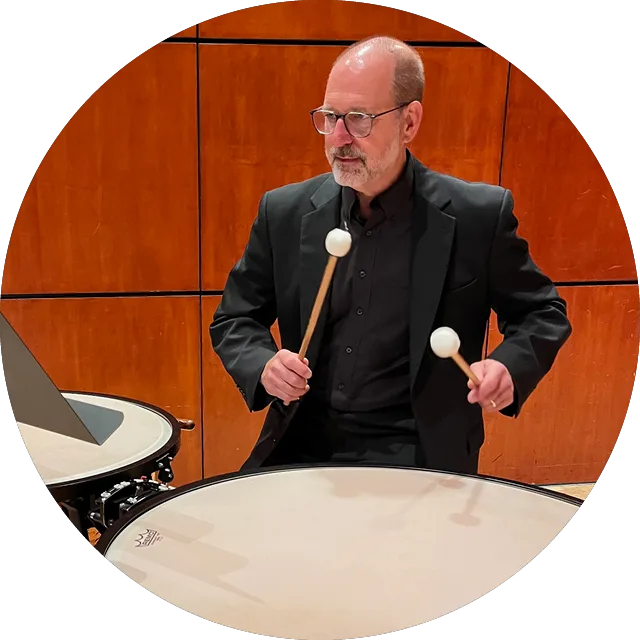
John Beck
Department of Music – Adjunct Faculty
John R. Beck served as Coordinator for Arts & Health Partnerships at the University of North Carolina School of the Arts (UNCSA) from 2023-25 after 25 years as Professor of Percussion.
Read More…
He continues to teach as an adjunct instructor at Wake Forest University and UNCSA devoting most of his time facilitating interactive group drumming through his non-profit organization Resilient Rhythms Drumming. Beck is the Principal Percussionist of the Winston-Salem Symphony and a member of the Greensboro Symphony and Brass Band of Battle Creek. A former tour soloist with the United States Marine Band, Jack Daniel’s Silver Cornet Band, and the New Sousa Band, he also performed regularly with the National and Baltimore Symphonies. John is Past President of the Percussive Arts Society and holds degrees from the Oberlin Conservatory and Eastman School of Music. He is a recipient of the League of American Orchestras Ford Award for Excellence in Community Service for his work as a researcher using interactive group drumming with stem cell transplant recipients and community engagement as a drum circle facilitator in North Carolina. In 2025 he received a Cam Busch Arts Transforming Environments award from the National Organization for Arts in Health for his collaborative work with recreational therapists in behavioral health units in the Atrium and Cone Health systems.

Megan Bennett-Jones
Assistant Professor, Health and Exercise Science; Director, Health Policy and Administration
Megan Bennett-Jones, MS, MS, PhD, is an Assistant Professor in the Department of Health and Exercise Science at Wake Forest University, and Director of WFU’s Health Policy and Administration program, where she teaches courses in epidemiology and the roots of health inequity.
Read More…
Her research sits at the intersection of behavioral science, health equity, and community-engaged qualitative methods, guided by the principle that communities most affected by health disparities should be genuine partners — not passive subjects — in the science meant to serve them. Dr. Bennett-Jones has more than 15 years experience designing and evaluating community-based participatory interventions with populations historically underserved by mainstream research, including Native and Indigenous populations, communities of color, immigrants and refugees, and older adults. She serves as Principal Investigator or Co-Investigator on multiple NIH-funded projects, including the HEAL Initiative’s IMPACTS trial for patients experiencing cancer pain; an NIH-funded partnership with the Lumbee Tribe to build Indigenous-led pain and substance-use research infrastructure; the Community Outreach, Research, and Education advisory board project to enhance research inclusivity and engagement strategies; and multiple community-level projects variously addressing maternal health disparities, food insecurity, type II diabetes, and the impact of arts engagement on wellness. Her work draws on training across exercise physiology and psychology, systems science, human development, and clinical and translational science to explore how behavior, culture, and structural contexts shape health across the lifespan. Beyond the lab, Dr. Bennett-Jones is a singer who also plays violin and bodhrán — creative practices reflecting her belief in embodied, expressive approaches to healing.

Jason Fanning
Associate Professor
Jason Fanning is on faculty in the Department of Health and Exercise Science at Wake Forest University. He also holds an appointment in Internal Medicine, Gerontology and Geriatric Medicine at Wake Forest School of Medicine.
Read More…
His research is centered on physical activity behavior change in older adults, with a focus on increasing participation in enjoyable physical activity throughout the day. He has expertise in behavioral psychology, the use of commercial and research-grade activity monitors, and various aspects of mHealth application development and user-centered design.

Jessie Laurita-Spanglet
Lecturer in Dance, Department of Theatre, University of Southern Maine
Jessie Laurita-Spanglet is a dance-maker, collaborator, organizer, and educator whose work stems from her deeply embodied study of contemporary dance and improvisational practices.
Read More…
As a performer and collaborative dance-maker, Jessie has enjoyed working with many wonderful artists, most recently including Tristen Koepke, Matthew Cumbie, Christina Soriano, and Heart Stück Bernie. For the past decade, Jessie’s research, practice, and organizational efforts have focused on dance and health. In this capacity, Jessie is part of a Neuroarts Lab at Wake Forest University, where she has served as an interventionist, education coordinator, and teacher-trainer for the team’s work on researching and promoting the effects of dance for people with neurodegenerative diseases. In Maine, Jessie serves as a member of the Maine Arts and Health board that produced a series of virtual arts and health roundtables and Maine’s first in-person arts and health conference; she serves on Maine Council of Aging’s Creative Aging advisory council; and she teaches community movement classes in libraries, support groups, retirement communities, and hospitals throughout the state. Jessie was named a 2024 National Arts Strategies Creative Community Fellow: New England, and used her fellowship to work towards an arts-based social prescribing program for Maine communities. Jessie is a Lecturer in Dance at the University of Southern Maine where she directs USM’s annual Winter Dance Concert and is currently co-organizing an arts-based social prescribing pilot program for USM students struggling with social isolation and depression. Jessie holds an MFA in dance from the University of Maryland, and a BFA from the North Carolina School of the Arts.

Paige Rice
Assistant Professor in Health and Exercise Science at Wake Forest University
Dr. Rice is an Assistant Professor in the Department of Health and Exercise Science. Her research expertise is primarily in biomechanics and the influence of muscle power on clinical- and performance-related variables in healthy and aging populations.
Read More…
Dr. Rice has received funding from the National Institutes of Health to understand the role of muscle power in preventing knee osteoarthritis. Additionally, she has worked with dancers and older adults using dance as medicine. Her training is in basic and mechanistic neuromuscular biomechanics, focused on determining the mechanisms that underpin how our muscles influence health and performance outcomes in healthy adults and adults with neuromuscular and musculoskeletal challenges.